
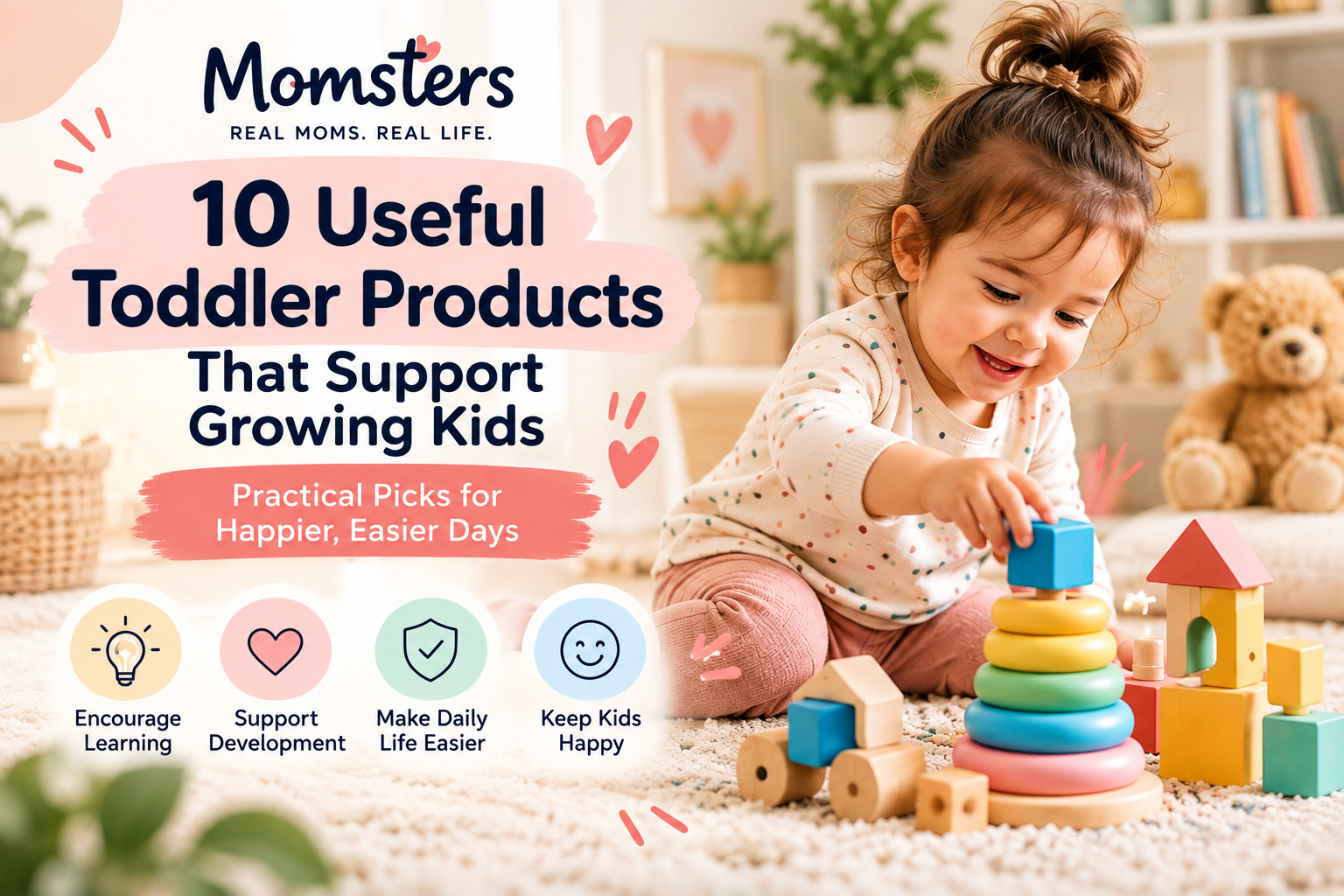
Choosing the right toddler products can make everyday family life easier as your little one becomes more active, curious, and independent. With so many toys, feeding accessories, learning tools, and safety items available, it is easy to spend money on products that are quickly forgotten.
Instead of filling your home with more stuff, focus on practical items that solve everyday problems, encourage age-appropriate independence, and can stay useful as your child grows. Here are 10 toddler product categories worth considering.
1. Toddler Products for the Kitchen: A Learning Tower
A sturdy learning tower can help a toddler participate in simple family routines at counter height, such as washing hands or helping with basic food preparation. Look for a stable design with appropriate guard rails, follow the manufacturer’s age and weight guidance, and supervise your child whenever it is being used.
2. Age-Appropriate Building Blocks
Large toddler-friendly building blocks encourage open-ended play, hand-eye coordination, problem-solving, and fine motor practice. Choose pieces designed for your child’s age and avoid small parts that could present a choking hazard.
3. Spill-Resistant Cups and Toddler Tableware
As toddlers learn to eat and drink more independently, easy-grip utensils, divided plates, suction bowls, and spill-resistant cups can make mealtimes easier. Prioritize products that are simple to wash and comfortable for small hands rather than buying a large matching set your child may quickly outgrow.
4. Board Books for Everyday Reading
Durable board books are made to handle enthusiastic little hands. Keep a small selection within your toddler’s reach and rotate them occasionally. Books about animals, colors, familiar objects, feelings, and everyday routines can make shared reading an easy part of family life.
5. Washable Art Supplies
Large crayons, washable markers, finger paints, and generous sheets of paper give toddlers room to explore creativity while practicing fine motor skills. Choose supplies specifically labeled for the appropriate age and supervise closely, especially while children are still likely to put objects in their mouths.
6. Simple Puzzles and Shape Sorters
Chunky puzzles and shape sorters can introduce matching, spatial thinking, colors, and shapes without requiring complicated instructions. Start with a small number of large pieces and increase the challenge gradually as your toddler becomes more confident.
7. A Child-Sized Step Stool
A stable step stool can support everyday independence at the bathroom sink or other suitable low-risk areas. Choose one with a non-slip base and surface, place it on a level floor, and supervise use. It should never be used as a substitute for safe access to high surfaces.
8. Open-Ended Pretend-Play Toys
Simple pretend-play items such as toy food, dolls, vehicles, dress-up pieces, or a small play kitchen can be used in many different ways. Open-ended toys often remain interesting longer because the child creates the story instead of following one fixed activity.
9. Storage Toddlers Can Actually Use
Low baskets or open bins can make cleanup easier because toddlers can see where their toys belong and reach the storage themselves. Simple picture labels can help young children match toys to their places. Fewer, accessible choices can also make independent play less overwhelming.
For more ways to use simple toys and household materials, see our indoor activities for kids for easy ideas you can try at home.
10. Outdoor Play Essentials
Depending on your child’s age and available space, a soft ball, bubbles, sidewalk chalk, or a simple ride-on toy can encourage active outdoor play. Choose products appropriate for your child’s developmental stage, use any required protective equipment, and follow the manufacturer’s safety instructions.
How to Choose Toddler Products Without Overbuying
Before buying something new, ask whether it solves a real problem, supports a skill your child is developing, or offers enough flexibility to be used in different ways. Checking the recommended age, safety warnings, dimensions, cleaning requirements, and available space at home can prevent disappointing purchases.
It also helps to introduce new items gradually. Toddlers do not need dozens of toys available at once. Rotating a smaller collection can keep familiar items interesting and make cleanup more manageable.
The Best Products Are the Ones Your Family Uses
The most useful toddler products are not necessarily the most expensive or fashionable. Look for safe, age-appropriate products that fit your family’s routines and give your child opportunities to practice, play, create, and become more independent.
If difficult moments come along with that growing independence, our guide to gentle parenting strategies offers practical ideas for maintaining clear boundaries while responding calmly to big emotions.
Leave a Reply