
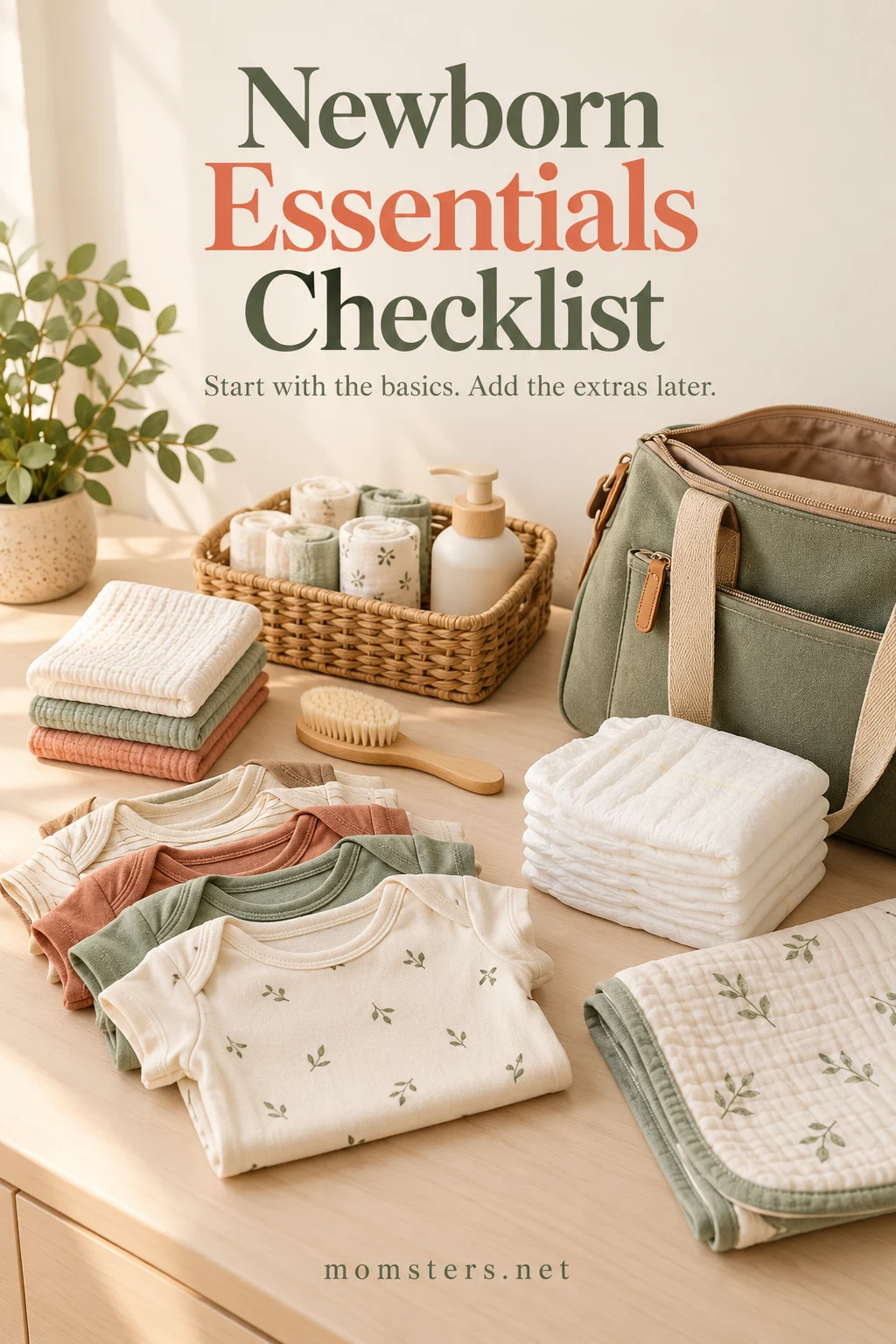
Preparing for a newborn can make it look as though you need 100 products before the baby even comes home. You don't. Start with the essentials that support feeding, diapering, safe sleep, clothing and travel, then add products when your real routine tells you what you need.
This checklist is intentionally practical. Brand preferences, climate, feeding plans and local safety requirements vary, so use it as a starting point rather than a shopping command.
Pair your shopping list with the Third Trimester Checklist for birth and home preparation, and return to our Pregnancy Week-by-Week Guide for your current stage.
The Short Newborn Essentials Checklist
- Diapers and basic changing supplies
- 6–8 sleepers/babygrows and 4–6 bodysuits as a practical starter range
- A safe infant sleep space with a firm, flat mattress and fitted sheets
- Feeding supplies appropriate to your feeding plan
- Burp cloths/muslin squares
- A few baby towels or soft washcloths
- Rear-facing infant car seat if traveling by car
- A practical diaper bag or everyday bag
- Digital thermometer and any health supplies specifically recommended by your baby's clinician
Diapering Essentials
- A starter supply of newborn/small diapers—avoid buying months of one size before you know the fit.
- Gentle, fragrance-free wipes or cotton wool/water according to your preference and local guidance.
- Changing mat or washable towel.
- Barrier cream if needed.
- A simple place for dirty diapers and soiled clothes.
You do not need a changing table in every room. A portable changing mat and a small basket can create a changing station wherever you actually spend time.
Newborn Clothes
Babies need comfortable layers, not a large wardrobe. The NHS starter list includes at least six all-in-one sleepsuits and four to six bodysuits, plus weather-appropriate layers. Those numbers are useful as a starting point, but laundry frequency and climate matter.
- 6–8 sleepers/babygrows
- 4–6 bodysuits/vests
- 2 lightweight warm layers when appropriate
- Socks/booties if useful
- Weather-appropriate hat and outer layer
- One simple going-home outfit
Avoid buying too many newborn-size outfits. Babies vary considerably in birth size and grow quickly.
Safe Sleep Essentials
- Approved crib, bassinet, portable crib or other locally compliant infant sleep product.
- Firm, flat, non-inclined mattress that fits correctly.
- Several fitted sheets.
- Waterproof mattress protector if compatible with the sleep product.
For sleep safety, the AAP recommends putting babies on their backs for every sleep on a firm, flat, non-inclined surface and keeping pillows, loose blankets, stuffed toys and other soft objects out of the sleep area. Room-sharing without bed-sharing is recommended for at least the first six months.
That means decorative crib pillows, bumpers and piles of blankets are not newborn essentials.
Feeding Essentials
If breastfeeding
- Comfortable nursing bras if wanted
- Breast pads
- Burp cloths/muslin squares
- Water bottle for the parent
- Pump and storage supplies only if they fit your feeding plan
If formula feeding or combination feeding
- Bottles and nipples/teats
- Bottle-cleaning brush
- Appropriate sterilizing equipment where recommended
- Formula appropriate to your baby's needs and local guidance
- Burp cloths
Feeding decisions can change after birth. Avoid buying a huge quantity of one bottle or nipple style before you know what works for your baby.
Bathing and Basic Care
- 2–3 soft towels or regular clean towels
- Soft washcloths
- Baby bath or safe alternative if you want one
- Baby nail-care tool
- Digital thermometer
- Gentle baby-care products used sparingly
Many specialized grooming gadgets can wait. Buy for a real need rather than for an imagined routine.
Travel and Leaving the House
- Rear-facing infant car seat appropriate to your baby's size and local rules if traveling by car.
- Stroller/pushchair suitable for a newborn if you plan to use one.
- Diaper bag or any roomy, washable everyday bag.
- Portable changing mat.
- Spare diaper, clothes and feeding supplies.
The NHS advises that the car seat and cot mattress are items that should not be bought second-hand. Always follow the manufacturer's instructions and local safety requirements.
Things You Can Usually Wait to Buy
- Large toy collection
- Many newborn outfits
- Specialized food equipment before solids
- Multiple baby containers/seats
- Decorative nursery accessories
- Large quantities of one diaper brand/size
- Every feeding accessory before you know your feeding routine
A Minimalist First-Week Setup
Create three simple zones: a safe sleep area, a diaper-changing basket and a feeding station. Add a small basket of spare clothes and burp cloths. That is more useful at 3 a.m. than a perfectly styled nursery.
FAQ
How many newborn clothes do I need?
A starter set of roughly six to eight sleepers and four to six bodysuits is usually more practical than a large wardrobe. Adjust for climate, laundry frequency and your baby's size.
What should be new rather than second-hand?
Follow current local safety guidance. NHS guidance specifically identifies the cot mattress and car seat as items that should be new.
Do I need to buy everything before birth?
No. Starting with essentials and adding products after you understand your baby's needs can reduce waste and unnecessary spending.
Get the free Momsters Weekly Planning Bundle to organize meals, shopping and family priorities.
Sources and Further Reading
General preparation information, not individual medical advice. Follow your care team and local product-safety requirements. Sources checked 6 October 2026.
NHS newborn essentials · AAP safe sleep guidance · Momsters pregnancy guide
Leave a Reply