
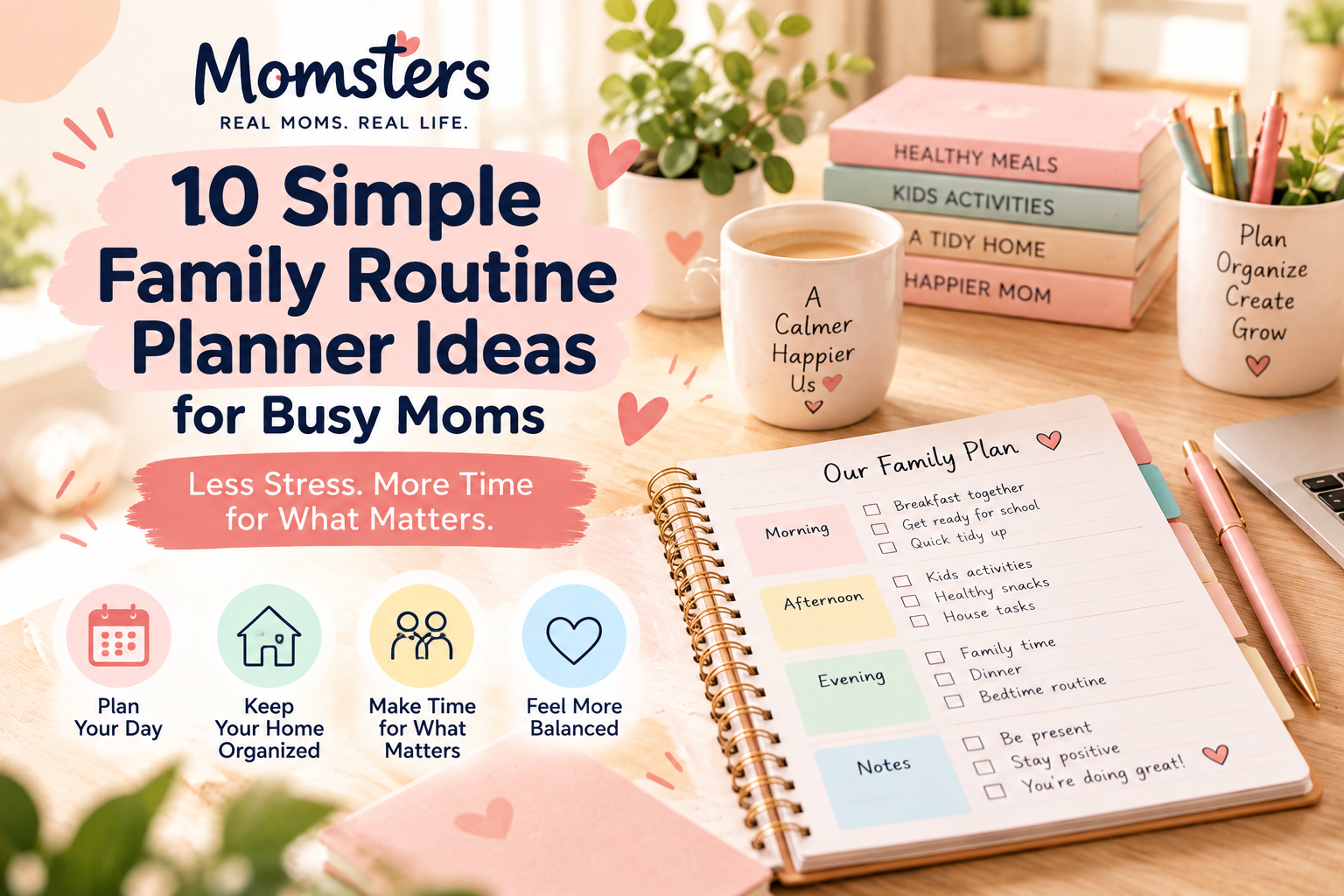
A simple family routine planner can reduce the mental load of remembering appointments, meals, school tasks, chores, and everything else competing for attention. The goal is not to schedule every minute. It is to create one reliable place where the family can see what matters next.
Whether you prefer a printable sheet, a notebook, or a digital template, these practical planner ideas can help you build calmer mornings, smoother evenings, and a more predictable week.
1. Start With a Weekly Family Routine Planner
Use one page to capture the week’s appointments, school events, activities, deadlines, and important errands. Keep it somewhere visible and review it briefly at the start of the week.
2. Create a Simple Morning Routine
List the few actions that make mornings work: getting dressed, breakfast, brushing teeth, packing bags, and leaving on time. For younger children, simple pictures can make the routine easier to follow independently.
3. Build an Evening Reset Checklist
A short evening checklist can include preparing clothes, checking school bags, clearing the kitchen, reviewing tomorrow’s schedule, and putting frequently used items back in their places. Keep it realistic enough to finish in 10–15 minutes.
4. Add a Meal Planning Section
Planning even four or five dinners in advance reduces the daily question of what to cook. Leave flexible spaces for leftovers, takeout, or a quick backup meal. Our weeknight dinners for picky eaters can help fill those busy-night slots.
5. Use a Family Chore Planner
Divide recurring household jobs into small, visible responsibilities rather than keeping the entire list in one person’s head. Assign tasks according to age and ability, and keep the system simple enough that everyone understands it.
6. Keep a School and Activities Tracker
Use a dedicated area for homework deadlines, school events, sports practices, permission slips, and items that need to leave the house. This is especially useful when several family members have different schedules.
7. Add a Shopping and Errands List
Keep groceries and errands together instead of scattered across notes and messages. Group errands by location when possible so several tasks can be completed in one trip.
8. Include a Small Self-Care Reminder
Your planner should not contain only things you do for everyone else. Add one or two realistic reminders for yourself, such as a walk, an earlier bedtime, quiet coffee, or calling a friend. See our self-care tips for busy moms for more manageable ideas.
9. Schedule a 15-Minute Weekly Review
Once a week, look ahead at appointments, meals, school needs, and unusual commitments. A short review helps you catch conflicts before they become last-minute emergencies.
10. Keep the Planner Flexible
A family planner is a tool, not another standard you have to meet. Leave blank space, move unfinished tasks forward, and change the layout when your family’s routines change.
Make Family Routines Easier to See
The best family routine planner is the one your household will actually use. Start with a weekly overview and one or two checklists rather than building an elaborate system all at once. Pairing the planner with a few practical home organization habits can make routines even easier to maintain.
Ready to try it?
Our Momsters Weekly Planning Bundle is now free. It includes 9 printable pages for weekly planning, meals, shopping, routines, tasks and priorities, plus 10 bonus AI prompts.
Leave a Reply